So here's what you probably didn't know about honey: sweet inspiration full of facts
Honey is not just a sweetener for tea. It has properties that make it exceptional in the kitchen, pantry, and home remedies.
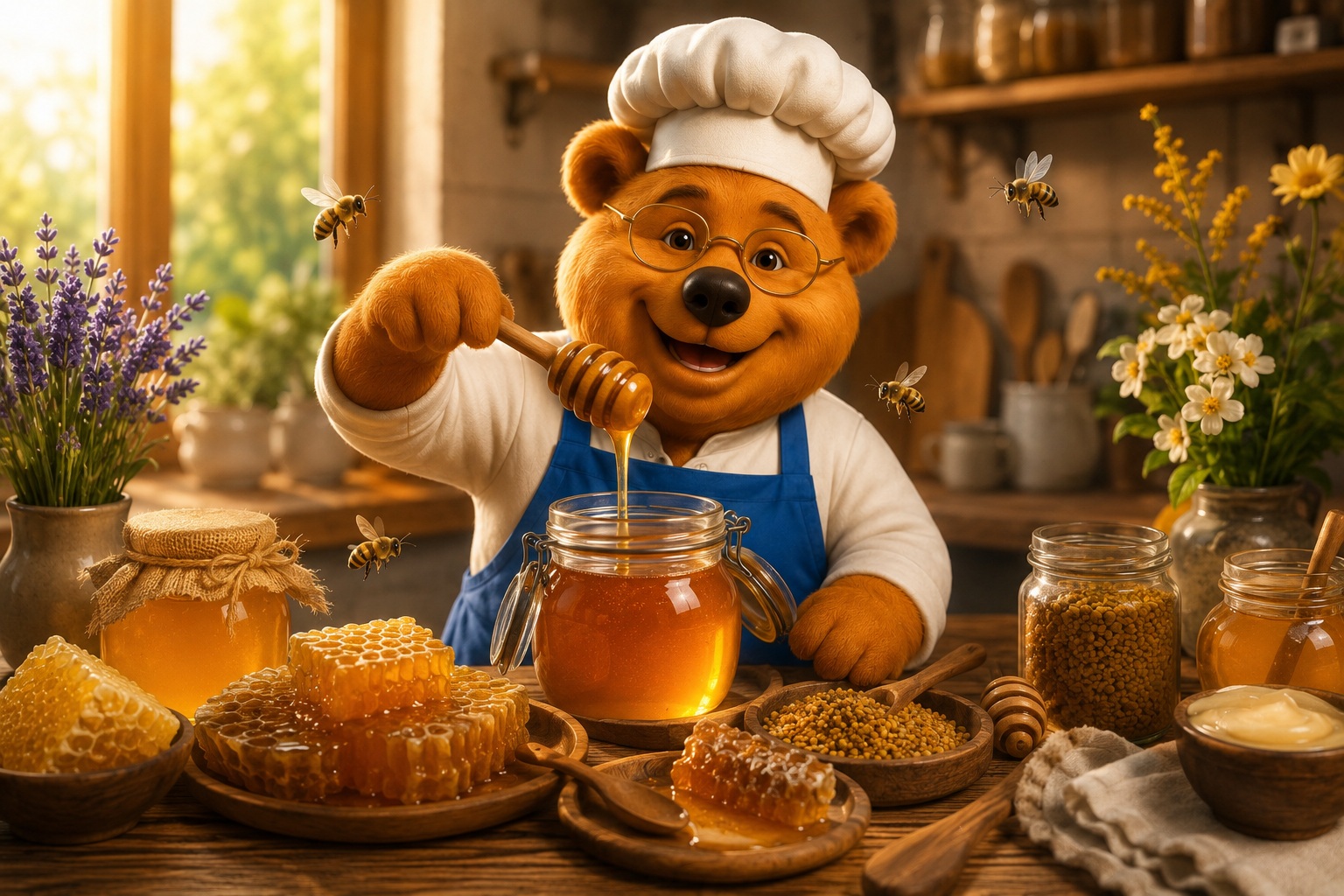
You definitely did not know this about honey
Honey is one of those foods almost everyone has at home, yet we often see it only as something sweet for tea. In reality, it is a small natural wonder — fragrant, long-lasting, sensitive to heat and full of little facts worth knowing in the kitchen.
- crystallized honey is not spoiled
- honey does not like high heat
- each type of honey tastes different
- it keeps best in a dry, dark place
Honey is one of the oldest sweeteners known to people. It is not just “sugar made by bees”. Its taste, aroma and colour depend on the plants from which bees collected nectar or honeydew. That is why one honey can be light and delicate, while another may be dark, bold and almost spicy.
And this is where its charm begins. Honey can transform plain yoghurt, tea, marinades, roasted vegetables and homemade cakes. Not by force, but by softness. It adds sweetness, aroma and a feeling of home.
It is the taste of meadows, forests, bees’ work and patience hidden in one jar.
Crystallization
When honey becomes solid, it does not mean it has gone bad. It is a natural process.
Heat
Very hot tea or cooking can unnecessarily reduce its quality.
Origin
Acacia, linden, forest and blossom honey all have different flavours and aromas.
Use
It works in drinks, desserts, marinades, dressings and even with cheese.
1. Crystallization is not a problem
Many people think that when honey crystallizes, it is old or spoiled. That is not true. Crystallization is a natural property of honey. It happens mainly because honey contains sugars, especially glucose and fructose, which may slowly form fine crystals over time.
Some honeys crystallize faster, others more slowly. Acacia honey usually stays liquid longer, while blossom or rapeseed honey may become solid quite quickly. So good honey does not always have to look perfectly runny like in an advertisement.
2. Honey in boiling tea? Better wait a moment
Honey is often added to hot tea, especially during cold season. It tastes wonderful, but if you add it to a boiling drink, you expose it to unnecessary heat. Honey is sensitive to heating, and strong or prolonged heat can change its aroma, colour and some of its natural properties.
The practical advice is simple: let the tea cool down a little first, then add the honey. It will taste smoother and you will treat it more gently.
3. Why does honey last so long?
Honey naturally contains little water, a high amount of sugars and has an acidic environment. That is why many microorganisms do not grow in it as easily as they do in ordinary foods. But that does not mean honey should be stored carelessly.
It keeps best in a tightly closed jar, in a dry and darker place. If you leave the jar open, honey can absorb moisture from the air. And moisture is exactly what does not help its shelf life.
- a dry place,
- a closed jar,
- darkness or partial shade,
- a clean spoon when serving.
- moisture,
- frequent overheating,
- direct sunlight,
- a dirty spoon in the jar.
4. Every honey has its own character
Honey is not one universal product. Acacia honey is usually light and gentle, linden honey is more aromatic, while forest honey is darker and stronger. That is why it is worth thinking about where you want to use it.
A lighter honey works beautifully in delicate tea or yoghurt. A darker, stronger honey can be wonderful with roasted meat, cheese or in a marinade. Cooking with honey is a small experiment: sometimes changing the type of honey is enough to make the result taste completely different.
It adds aroma, softness and that pleasant feeling that something homemade is hidden in the recipe.
5. Honey in the kitchen: not only for tea
Honey can be used much more creatively. Try adding it to a dressing with lemon and olive oil, to a marinade for chicken, roasted carrots, nuts, cheese or homemade granola. It works wherever food needs a small contrast: sweet against sour, soft against spicy.
It pairs beautifully with mustard, garlic, lemon, cinnamon, ginger, nuts and yoghurt. And when you do not feel like making anything complicated, a spoonful of honey on plain yoghurt, a few nuts and you have a dessert that needs no big explanation.
Conclusion: honey is inspiration in a jar
Honey looks ordinary only at first glance. Give it space and it becomes an ingredient that can sweeten, season, soften and connect flavours. We do not need to treat it as a miracle cure for everything. It is enough to see it as an honest food worth handling with care.
Because sometimes the best cooking idea does not begin with a recipe. It begins with a spoonful of honey. ❤️