Washing raw chicken does not make the food safer. On the contrary, the water can splash bacteria onto the sink, counter, hands, clothes, or kitchen utensils. The CDC states that raw chicken does not need to be washed before cooking, the USDA warns of the risk of cross-contamination, and the safest solution is to cook poultry to an internal temperature of 165°F / approximately 74°C. The Food Standards Agency also warns that washing raw chicken can spread campylobacter to hands, work surfaces, clothes, and kitchen equipment.
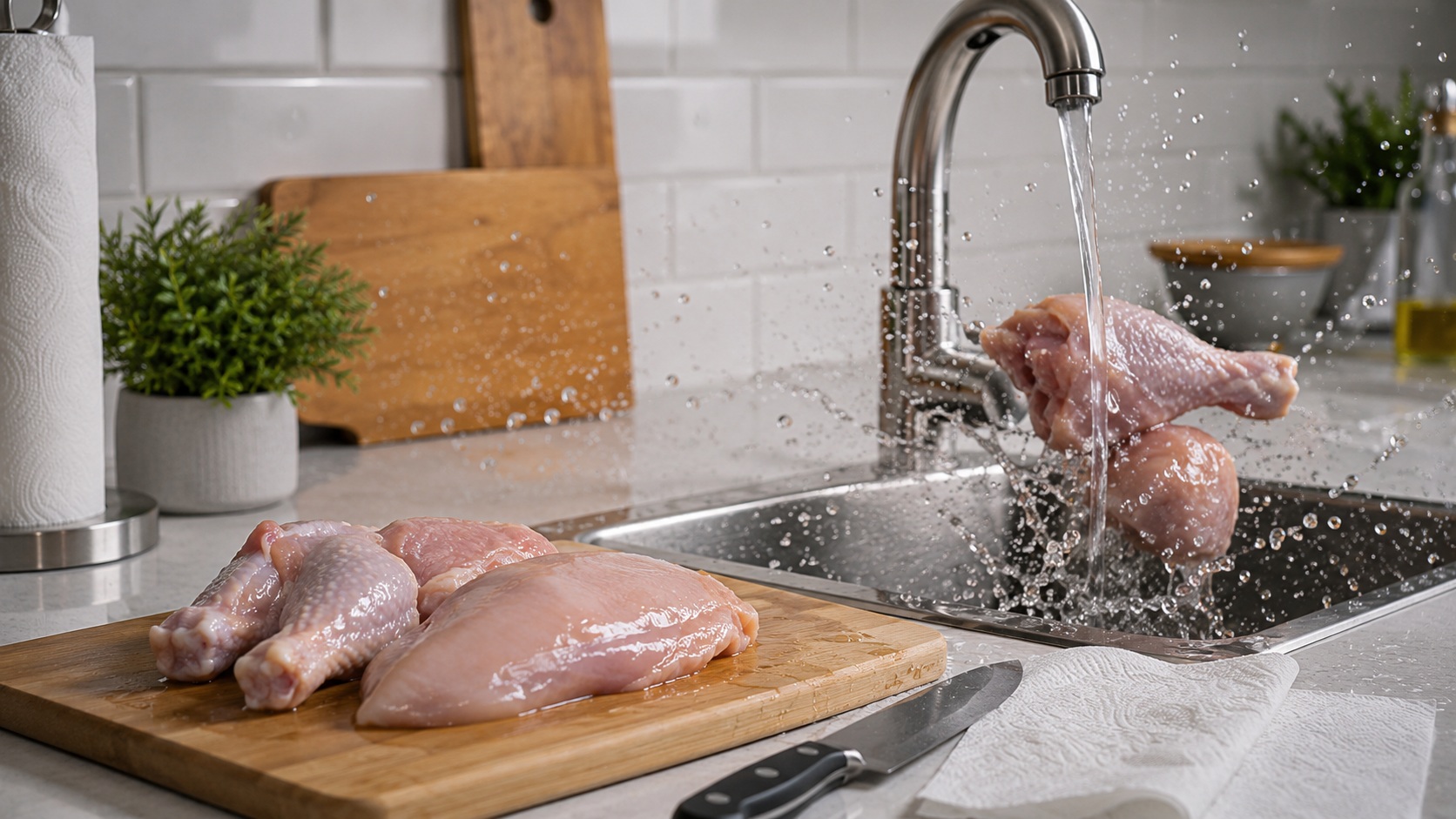
Why you should not wash raw chicken
It may look hygienic, but washing raw chicken can do more harm than good. Water droplets can spread bacteria from the meat to the sink, kitchen counter, hands or utensils. The safer solution is not washing, but proper cooking.
- do not wash raw chicken
- water can spread bacteria around the kitchen
- proper cooking kills harmful germs
- wash hands, boards, knives and work surfaces
The problem is splashing
When rinsing chicken, water droplets can carry bacteria to the sink and kitchen counter.
Heat is the answer
Chicken safety comes from thorough cooking, not from rinsing it under running water.
Clean what the meat touched
After handling raw chicken, wash your hands, board, knife, sink and work surface.
Why is washing raw chicken a problem?
Many people wash chicken because they feel it makes the meat cleaner. With raw chicken, however, this is not the recommended approach. When rinsing it, water droplets can spread bacteria from the surface of the meat to the sink, kitchen counter, clothing, hands or utensils.
The main issue is cross-contamination. This means that germs from raw meat can get onto food or objects that will not be cooked afterwards. For example, salad, bread, a clean plate or the handle of a knife.
Raw chicken does not need to be washed before cooking. Safety comes from proper cooking and careful hygiene after handling raw meat.
What should you do instead of washing it?
If there is excess liquid from the packaging, you can gently pat the meat dry with a paper towel. Throw the towel away immediately and wash your hands. Do not put the chicken under running water.
- do not rinse the meat under water,
- if needed, pat it dry with a paper towel,
- throw the towel away immediately,
- wash your hands with soap and warm water.
Thoroughly clean the board, knife, plate, sink and work surface after contact with raw chicken. Keep raw meat separate from ready-to-eat foods and foods that will not be cooked.
A safer routine for preparing chicken
| Step | What to do | Why it matters |
|---|---|---|
| Before preparing | Wash your hands and prepare a clean cutting board. | You reduce the risk of transferring germs to food. |
| During preparation | Keep raw chicken separate from vegetables, bread and ready-to-eat foods. | You help prevent cross-contamination. |
| Cooking | Cook, bake or grill chicken thoroughly. | Food safety mainly comes from heating the meat properly. |
| After preparation | Wash your hands, utensils, sink and work surface. | You remove raw meat juices and reduce the risk of spreading bacteria. |
This simple rule makes much more sense with raw chicken than rinsing it under water.
Conclusion: chicken belongs in the pan, oven or pot — not under running water
Washing raw chicken is a habit that has been passed down in many households for years. According to food safety recommendations, however, chicken does not need to be washed before cooking. What matters more is avoiding water splashes, keeping raw meat separate from other foods, cleaning everything it touched and cooking it thoroughly.
The safest kitchen is not the one where meat is rinsed. It is the one where food is handled cleanly, separately and with common sense.